The book for founders whose company is growing and becoming harder to lead
When Visionaries Fail explores the transition most entrepreneurs underestimate: the shift from founder-driven growth to the kind of leadership a scaling company actually requires.
This is not a motivational business book. It is a direct look at what starts to change as companies grow: decisions slow down, ownership gets blurry, capable teams still escalate too much upward, and founders find themselves pulled back into issues they thought were already delegated.
The problem is often not effort, intelligence, or ambition. The problem is that the business has entered a new stage, while the leadership model is still anchored in an earlier one.
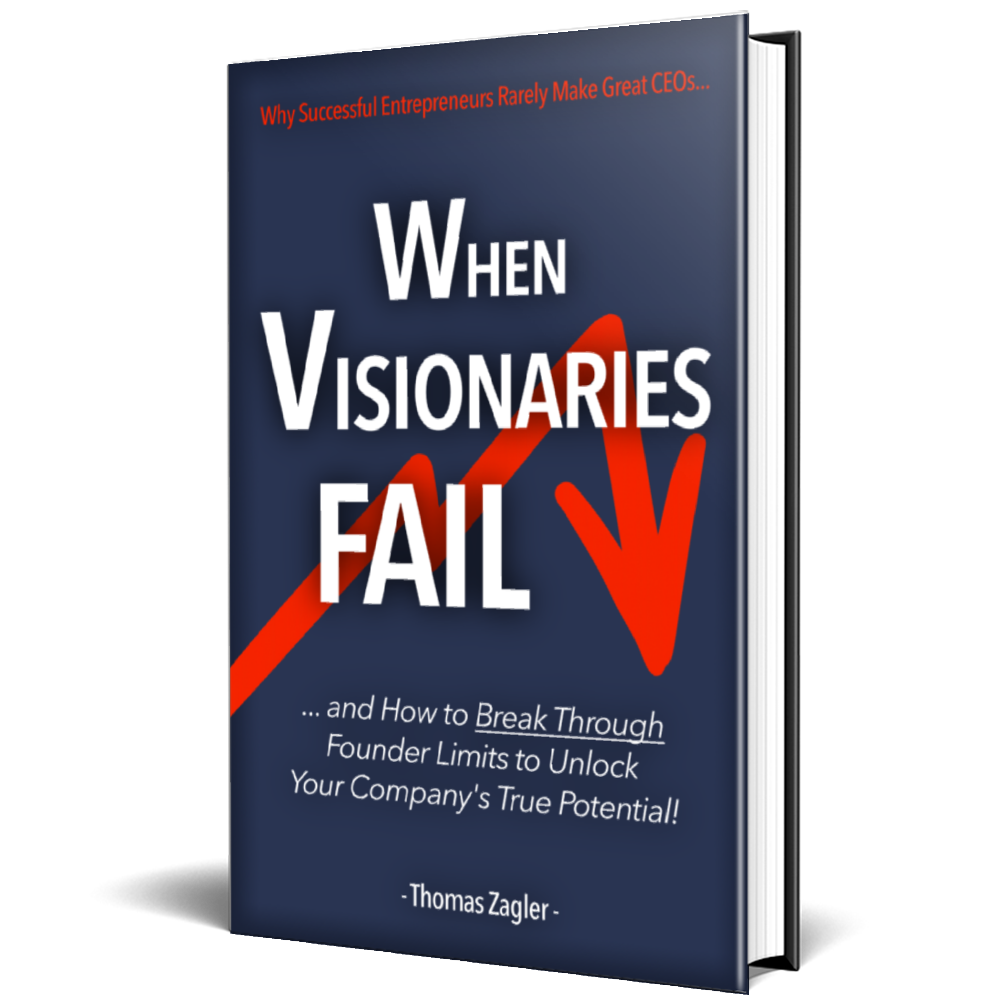
Why this book matters
There comes a point in many growing companies where what used to work no longer works with the same ease. Decisions take more energy, alignment becomes harder, and the business starts to feel heavier than it used to.
This book helps founders make sense of that shift, put language to the friction, and understand what scaling begins to require before the strain becomes chronic.
What founders will recognize in this book
Why growth feels heavier than expected
The business is moving forward, but with more friction, more effort, and less ease than before.
Why too much still comes back to the top
Even with capable people in place, too many decisions, escalations, and dependencies still find their way back to the founder.
Why roles exist, but ownership still feels unclear
Responsibility is present on paper, yet important issues still drift, overlap, or remain unresolved longer than they should.
Why the founder feels pulled into too much
Not because the team is weak, but because growth has created a level of complexity that the old way of leading can no longer absorb.
What the book gives you
- A clearer understanding of why growth often starts to feel harder before the reason is obvious
- A practical lens for interpreting friction in leadership, ownership, and decision flow
- A more accurate way to distinguish surface problems from deeper structural shifts
- A sharper view of what changes as a company moves from founder-driven to scale-ready
- Language for understanding what many founders feel but struggle to articulate
- A framework for seeing why effort alone no longer solves the next stage of growth
- A deeper appreciation of what scaling begins to require from leadership
- A strong foundation for moving into more focused diagnostic or execution work afterward
Who this is for
Founders
who have built something meaningful and now find that growth is asking more of them than they expected.
CEOs of growing companies
who want a clearer understanding of why execution, alignment, and accountability become harder as complexity rises.
Operators and investors
who want a more precise view of the leadership transition that often sits underneath growing organizational friction.
Why I wrote it
I wrote When Visionaries Fail because this phase of growth is common, costly, and still widely misunderstood.
Many founders sense that something is changing as the company grows, but the shift is hard to name clearly. What appears on the surface as slower execution, weak delegation, or recurring misalignment often points to something deeper in how leadership now needs to evolve.
This book was written to make that shift easier to recognize, easier to understand, and easier to respond to with more clarity.
Get the book
If your company is growing and leadership is becoming more complex than expected, this book will help you understand why.
Frequently asked questions
What format will I receive?
The book is delivered as a digital edition in PDF and ePub format.
Who is this book most relevant for?
It is written primarily for founders and leaders of growing companies who are seeing more friction, complexity, or leadership strain as the business scales.
Is this a tactical handbook or a strategic book?
It is strategically sharp and practically useful. The book helps readers understand what is really changing beneath the surface so they can respond more intelligently.
What should I do after reading it?
The book gives you the language and perspective to understand the transition more clearly. From there, you can decide whether to address it internally or go deeper through structured diagnostic and execution work.